
When people talk about ChillyRoom Games, many longtime players instantly think of the breakout mobile hit Soul Knight from 2017, and while browsing early impressions through a Crickex Login style event feed, that pixel driven legacy still shapes expectations. For years, the studio was largely associated with compact visuals and modest technical ambition, leaving few players expecting cutting edge presentation or high end production values from its future projects.
That perception, however, is starting to shift. In recent months, ChillyRoom has revealed two projects with noticeably higher production standards and striking visual direction. One is the action RPG Loulan Curse of the Desert, which previously showcased hands on demos, while the other is Ant City, a cyberpunk themed roguelike action game that recently debuted during a special preview event. Experiencing Ant City firsthand makes it clear that this is not a safe continuation of old formulas.
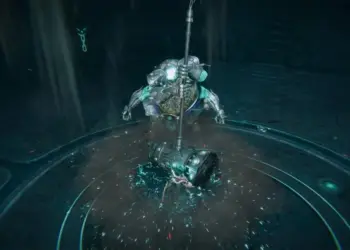 The first word that comes to mind is cool. Visual fidelity stands out immediately, with lighting, textures, and effects that easily rank among the stronger entries in the roguelike action space. The artistic inspiration asks what ancient mythology might look like if reimagined through a cyberpunk lens. Figures inspired by legends such as Meng Po, Taotie, and the Merfolk appear reborn through cybernetic augmentation, blending flesh and machinery in ways that feel bold and imaginative.
Viewed from a top down perspective, players control a cyber enhanced fighter navigating neon soaked streets and towering concrete structures. Enemies swarm relentlessly, launching melee strikes, grenades, bullets, and laser fire. Yet the protagonist deflects blade attacks with steel on steel precision, hurls explosives back at attackers, and even redirects gunfire and energy beams toward their source. Once the enemy assault falters, swift lethal counterattacks carve through the crowd with dramatic flair.
At the heart of Ant City lies its parry system. Built around simple attack and deflect inputs, the game offers generous timing windows and high priority cancellations, allowing players to respond fluidly as long as they can read enemy animations. Even imperfect reactions can still result in partial defensive success, and nearly all incoming attacks can be handled this way. Successful parries reward players with significant benefits, breaking enemy defenses or returning ranged attacks directly, an essential tool given the protagonist’s limited ranged options.
That said, parrying alone does not carry the entire experience. Basic movement and attack options feel intentionally restrained, with longer recovery frames creating moments of tension when surrounded. Enemy density and alternating attack patterns can quickly overwhelm players relying solely on default abilities. Fortunately, as any experienced player logging back in via Crickex Login would expect from the genre, Ant City leans heavily into build systems to fill these gaps.
Build variety is tightly tied to weapon choice. In the preview, players could select between a balanced long blade and fast dual swords. Each weapon defines a distinct playstyle, encouraging experimentation and strategic adaptation. As the systems unfold, it becomes clear that Ant City’s identity is forged through this interplay of precision defense, visual spectacle, and flexible progression. By the time a session winds down and players check updates through another Crickex Login routine, Ant City leaves a strong impression of a studio confidently stepping into new territory.