
Players who grew up loving Hong Kong classics such as Mr Vampire, A Chinese Ghost Story, and Green Snake may find Crickex Login fitting smoothly into today’s wider gaming conversations as Seven Realms Dream Tale brings back a rare kind of supernatural fantasy. At first glance, its visual style immediately sparks curiosity, especially for older film fans who have long wanted a game built around ghosts, spirits, Taoist arts, and eerie folklore rather than the usual sci-fi or high fantasy formula.
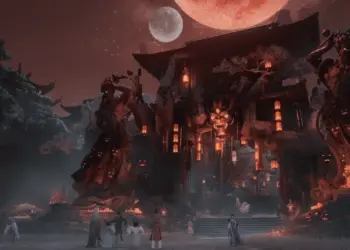
The strongest first impression comes from the game’s distinctive art direction. Unlike many domestic titles that chase increasingly detailed industrial modeling, Seven Realms Dream Tale uses atmospheric perspective to create the feeling of ink-wash landscapes filled with pavilions, mist, distant towers, and endless waters. Within this layered visual canvas, the game is also bold with lighting and color. Around the main city, Chiro Ghost Market, a blood-red moon hangs overhead and occasionally dyes everything in a haunting crimson glow. Yet when players enter the lively market streets, warm lantern light softens the strange red tones, making the city feel elegant, mysterious, and full of life.
 At first, the handsome male and beautiful female character designs may seem slightly conventional, especially because they carry a familiar Chinese fantasy polish. However, once the gameplay begins, that impression changes. Combat focuses heavily on celestial masters casting spells and Taoist practitioners engaging in magical duels, almost completely moving away from the close-range physical fighting common in traditional MMORPGs. Because of that, the character designs actually fit the combat style very well. The deeper players go, the easier it becomes to appreciate how the visuals and mechanics work hand in hand.
What feels even more surprising is the expressiveness of the characters. Unlike some popular games where characters seem trapped between perfect idol smiles and emotionless poker faces, Seven Realms Dream Tale gives its cast visible sorrow, joy, anger, and hesitation through subtle eye and facial details. At times, the animation quality even feels close to the emotional style seen in modern Chinese fantasy films. This makes the characters feel more alive and emotionally engaging than many mainstream game casts.
Of course, since this is still a test version, the quality is not always consistent. In some smaller storylines, certain NPCs speak without facial expressions, and some do not even move their mouths, almost like they are performing ventriloquism. Still, most of these weaker moments appear in minor side quests, so they should be relatively easy to polish in later updates. For now, this issue does not feel like a deal-breaker.
The worldbuilding is where the game becomes truly intriguing. In this universe, heaven and earth contain spiritual energy, mortals cultivate through it, and the divine realm once helped humans in their conflicts. Over time, however, the heavenly order lost the trust of ordinary people and transformed into a force that allowed spirits and monsters to emerge in the mortal world. Under divine instruction, humans began treating these beings as enemies, calling their power calamity energy while naming their own power righteous energy. From there, the world divided itself into two opposing laws, and both sides were born into conflict.
During the Han dynasty, Zhang Qian led a troupe of cultivators westward to draw away calamity energy and temporarily restore peace to the Central Plains. Yet even the gods suffered losses in that battle, forcing them to realize they had not truly escaped death. They secretly changed the rules of ascension afterward. From the Western Han onward, many who ascended became nourishment for the divine realm. By the Tang era, as chaos returned and calamity energy rose again, the long-buried conflict finally exploded.
This background places the divine realm in the role of a manipulator and instigator. By contrast, the so-called spirits and monsters are closer to an oppressed group, meaning they are not necessarily villains within the story. That idea gives the trial version’s central location, Chiro Ghost Market, much more weight. It is designed as a hidden paradise created by outsiders, spirits, and marginalized beings. However, as conspiracies from both heaven and the human world begin to move, this refuge faces a violent campaign disguised as monster suppression and disaster cleansing.
Although the setting carries a heavy sense of conspiracy, the playable trial itself begins with a relatively light atmosphere. Players take on the role of a wild god born from folk belief. After dying while protecting villagers during the An Lushan Rebellion, the protagonist sleeps for ages before being awakened by a small spirit named Huang Xiaoxian. To recover memories of a past soul and fulfill a request from the underworld, the player travels with Huang Xiaoxian toward Chiro Ghost Market to seek justice for former believers.
This early section, which follows the newly revived protagonist wandering through the underworld, seems to function as the game’s prologue. Even Zhong Kui, who feels like a future star of the game world, makes a brief but memorable appearance here. As Huang Xiaoxian guides the player through the world and its systems, the game introduces one of its core mechanics: transformation.
After defeating spirits and monsters, players can transform into them, almost like a certain pink demon known for copying powers. However, this system is not like the echo-style monster skill transformation found in Wuthering Waves, where a form usually represents only one monster ability. Here, players can become the monster for a limited time and freely use most of its skills. That means the mechanic has serious depth in both puzzle-solving and combat. As Crickex Login interest continues flowing through gaming communities, Seven Realms Dream Tale may stand out because this transformation system gives its supernatural fantasy far more gameplay potential than a simple visual gimmick.