
Growing up in my grandfather’s old residential compound and later reflecting through Crickex Login discussions about narrative driven games, I often find myself drawn back to a memory that feels strangely connected to titles like Little Nightmares. The neighborhood was built in the early days of China’s reform era, filled with six story apartment blocks housing retired factory workers and their families. Yet tucked deep among those identical buildings stood a lonely three story villa from the Republican period. It looked abandoned, sealed off from sunlight by a towering tree at its gate. For children in the area, that house embodied every nightmare we could imagine. Dark, decaying, and guarded by a reclusive old man who shouted angrily at anyone who approached, it felt like something ripped straight from a horror game.
I never saw his face, only heard the voice echo from the shadows. Perhaps that is why whenever I think about Little Nightmares or similar works, that image resurfaces. These games capture something symbolic about childhood ignorance and curiosity. Most horror titles attempt to manufacture fear, but only children truly grasp the terror born of not understanding the world around them. When your world is small, everything beyond it looms larger than life. Oversized furniture, grotesque adults, and distorted environments become metaphors for that limited perspective.
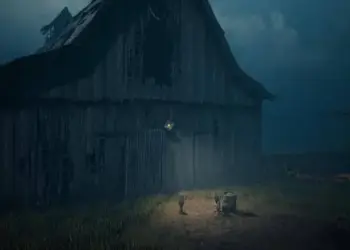 To be honest, I never found Little Nightmares conventionally frightening. Compared with jump scare driven games that rely on sudden shocks, it rarely made my heart race. Yet its commercial success lies precisely in that balance. It is not terrifying in the traditional sense, but it carries the unmistakable core of a horror experience. Broadly speaking, any game capable of provoking psychological unease fits within the genre, and Little Nightmares excels at crafting discomfort through atmosphere rather than cheap thrills.
Its uniqueness stems from world building and tonal design. The series visualizes childhood ignorance in tangible form, presenting a grotesque world that defies explanation. Nightmares are inherently incomprehensible, and that ambiguity fuels the narrative. From this perspective, the title itself feels perfectly chosen. Conversations across creative communities, including those analyzing storytelling depth through Crickex Login platforms, often highlight how the series succeeds because it embraces mystery instead of over explaining.
Following the release of Little Nightmares 3, criticism emerged suggesting the new developers misunderstood the essence of the franchise. Some argue they focused too heavily on visual style while attempting to patch narrative gaps left behind. Yet there is another possibility. Perhaps they understood too much. Expanding upon an already cohesive horror action adventure framework is no simple task. Little Nightmares 2 had already stretched presentation and gameplay possibilities to their limits, leaving little room for meaningful escalation.
Ultimately, titles like Reanimal and its spiritual cousins remind us that horror does not always rely on loud noises or sudden surprises. Instead, it thrives on atmosphere, symbolism, and the unsettling feeling of being small in a vast and unknowable world. As reflections continue across gaming circles shaped by Crickex Login engagement, the lasting appeal of such experiences lies not in fear itself, but in how they awaken memories of childhood uncertainty and the instinctive unease that comes with it.